Zero-Click Search: Why Traffic Volume Is the Wrong Metric

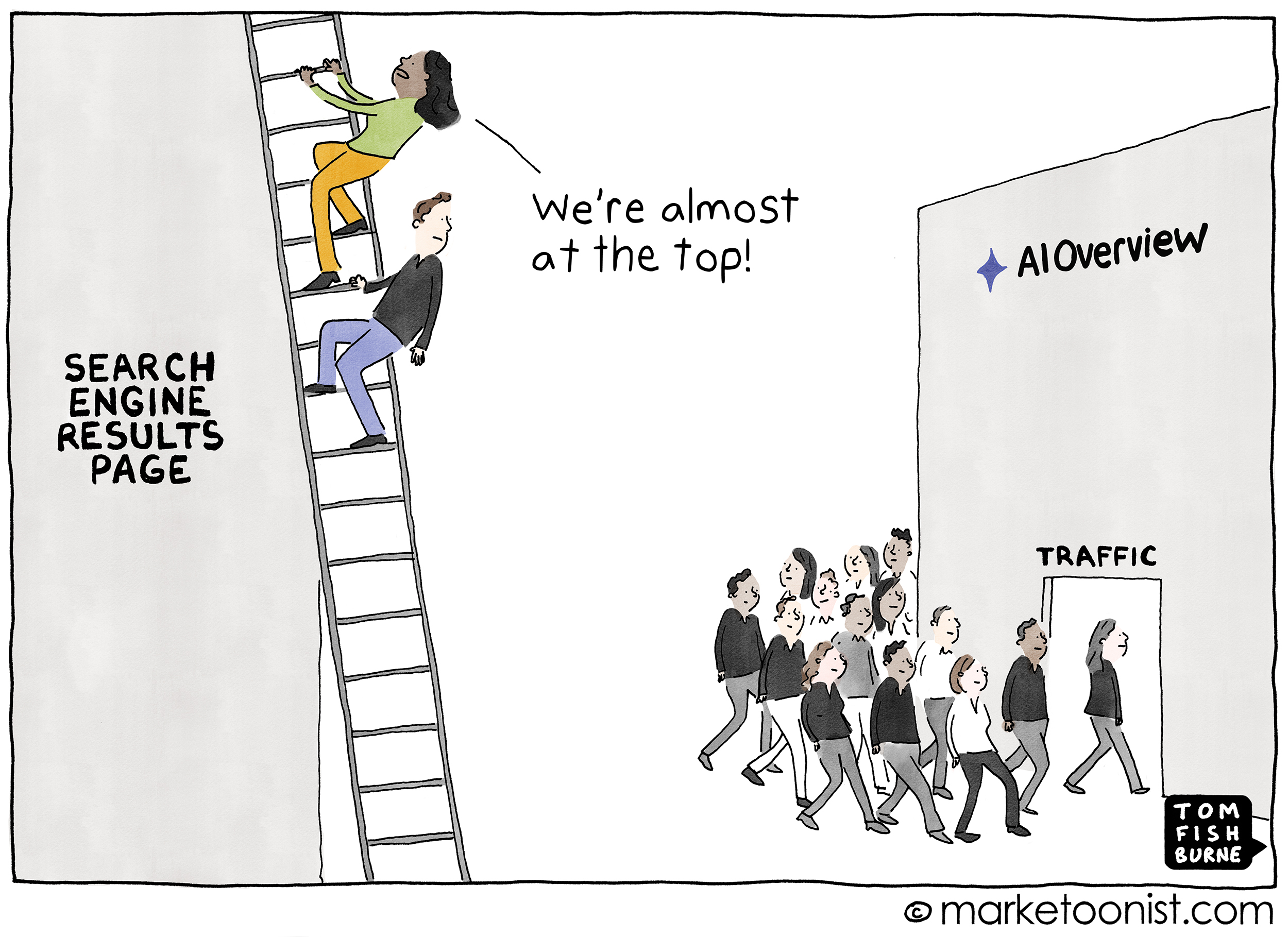
​Marketing Directors and C-Suite executives are staring at a worrying trend in their analytics. Organic traffic for informational queries is plateauing or dipping. The knee-jerk reaction is to blame the SEO agency or demand more output. This is a strategic error. The decline is not a failure of execution. It is a fundamental shift in user behavior driven by Zero-Click Search.

Search engines and AI-integrated platforms (like Google’s SGE, Perplexity, and Bing Copilot) now answer questions directly on the results page. They synthesize data to provide the "what," "where," and "when" without requiring a user to visit a website. If your content strategy relies on answering basic questions, you are losing visibility. However, for brands focused on revenue over vanity metrics, this is an opportunity to increase efficiency.

From Traffic Hoarding to Value Verification

The era of high-volume, low-value traffic is ending. For years, companies published derivative content to capture search volume. This resulted in inflated analytics reports where "sessions" looked healthy, but "conversions" remained stagnant. Zero-click search acts as a filter. It satisfies the tire-kickers and casual browsers on the search results page.

This leaves a smaller, but significantly more qualified pool of users who click through to your site. These users are not looking for definitions. They are looking for solutions, nuanced analysis, and partnership.

We must stop optimizing for "clicks" and start optimizing for "citations." In an AI-driven search environment, being the source of truth that the AI cites is the new ranking #1.

Data Integrity Determines Citation

AI models and search algorithms prioritize authority. They determine authority through clear, structured data. This is where Technical Authority becomes the primary lever. You cannot rank—or be cited by an AI—if the crawler cannot understand the source and context of your content.

To survive zero-click, we must act as "Data Plumbers" before we act as content creators.

  • Schema Markup: You must explicitly tell search engines who wrote the article, what organization they represent, and valid credentials.
  • Entity Identity: The site architecture must clearly link content to a specific area of expertise.
  • Load Speed: AI agents prioritize fast, accessible data sources for real-time synthesis.

If your technical infrastructure is broken, your content is invisible to the Large Language Models (LLMs) answering user questions.

Moving from Aggregation to Origination

The vast majority of B2B content is aggregation. It summarizes what others have said. Generative AI can now do this instantly and for free. Therefore, aggregation has a market value of zero.

To earn the click in a zero-click world, you must leverage Content Authority by providing what AI cannot invent.

  • Proprietary Data: Publish original research, internal benchmarks, or survey results. AI cites data; it does not generate it.
  • Subject Matter Experience: Algorithmically generated answers lack nuance. Human experience, specifically "how we solved X problem," remains premium inventory.
  • Opinion and Forecasting: AI predicts the next word in a sentence. It does not predict market shifts with strategic intuition.

If your content can be generated by a prompt, it is already obsolete.

How to Measure Success Without Clicks

We operate on the belief that if you cannot measure it, you shouldn't be doing it. However, measuring zero-click impact requires abandoning the obsession with "Total Sessions." We must pivot to revenue-focused metrics.

1. Conversion Rate on Organic Traffic: As low-intent traffic stays on the search page, the traffic that reaches your site should have a higher intent. If traffic drops by 20% but conversion rates increase by 25%, your strategy is working. You are doing less work for the same revenue.

2. Brand Search Volume: When users see your brand cited repeatedly in AI summaries, they begin to search for your company directly. An increase in "Direct" or "Brand Name" search queries indicates you are building authority.

3. Assisted Conversions: Use GA4 to track the user path. A user may read an AI summary attributing your data, leave, and return days later via a direct channel. Attribution models must account for this non-linear journey.

The Next Step

Zero-click search is not a threat to experts. It is only a threat to content farms. The strategy must shift from chasing volume to commanding authority.

Audit your top 10 traffic-generating pages. Ask a simple question. Does this page offer a unique data point or perspective, or is it a summary of public information? If it is the latter, it is vulnerable.